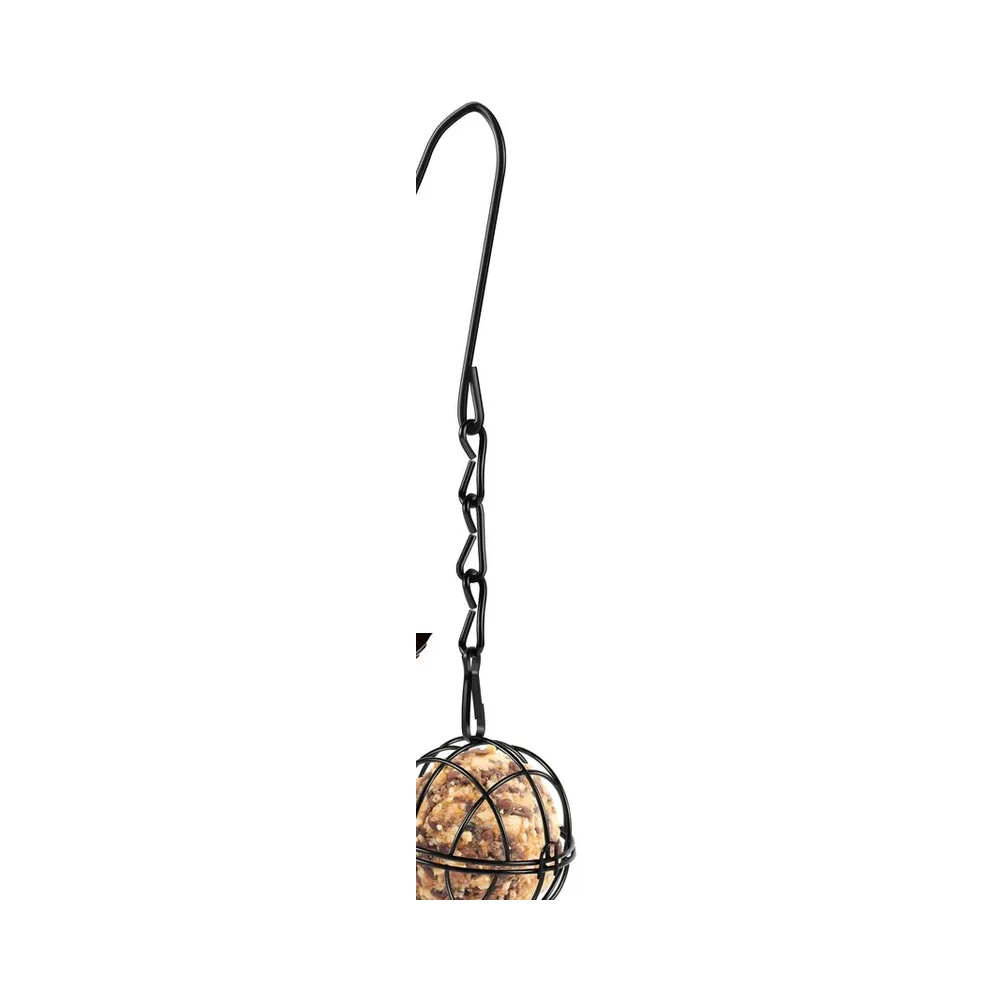
 Hanging Metal Fat Ball Feeders (Set of Four)
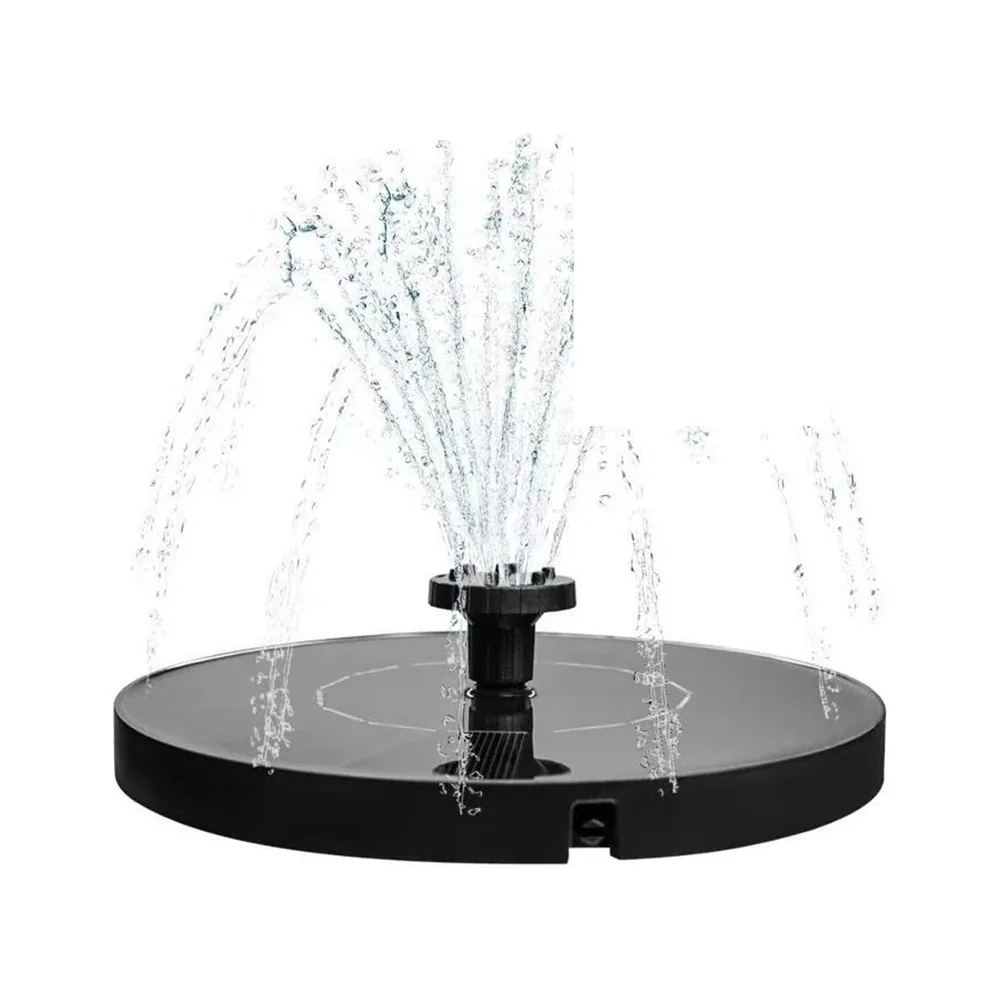 Solar Fountain for Your Bird Bath
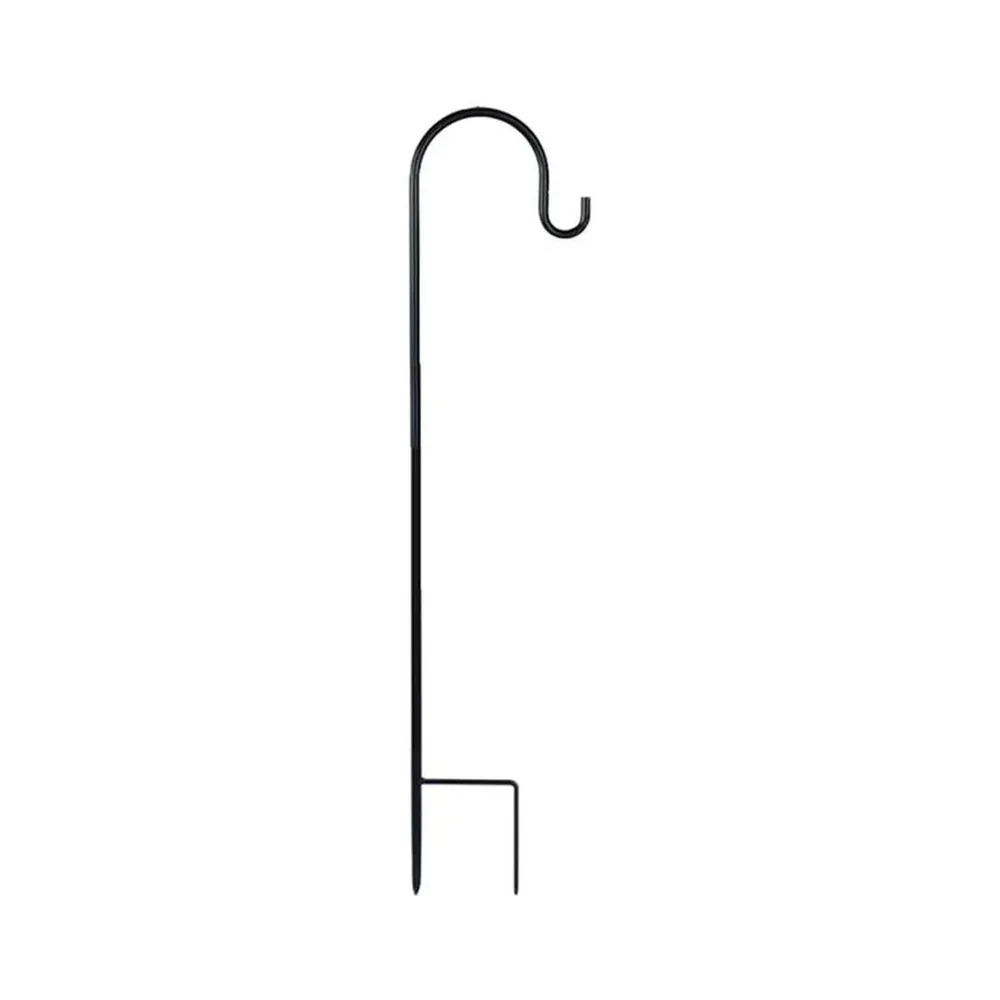 Shepherd Hook Feeder Pole
The complaint I hear most often is some version of this: I put a feeder out, and within a week a gang of starlings empties it in twenty minutes and the blue tits have given up.
It is a solvable problem, and the solution is unglamorous. It is a gap, about four centimetres across.
Why four centimetres
That measurement is the practical dividing line in a British garden.
Through it: blue tits, great tits, coal tits, long-tailed tits, goldfinches, greenfinches, chaffinches, house sparrows, wrens, dunnocks.
Not through it: starlings, woodpigeons, collared doves, magpies, jackdaws, and grey squirrels.
Go much bigger and starlings work out how to squeeze in — they are more flexible than they look. Go much smaller and you start excluding greenfinches and great tits, which are exactly the birds most people are pleased to see.
What to buy
A caged feeder
The most reliable option, and it solves two problems at once — the same cage that stops a starling stops a squirrel.
Our caged fat ball feeders work this way, in steel so there is nothing to chew through. Fat is also the food small birds most need in winter, so it is a sensible pairing.
For seed, look for the same construction: small-bird feeders with a cage or small ports.
A window feeder
Underrated for this exact purpose.
Large birds rarely commit to a feeder flat against glass — it is too enclosed and too close to movement inside. So a window feeder is a small-bird feeder without needing a cage at all.
It also puts a blue tit about forty centimetres from your sink, which is worth something on a grey morning.
Short perches, small ports
Feeder design does some of the work. A feeder with short perches and small ports suits birds that cling and frustrates birds that need to stand and lean in.
It is a softer filter than a cage, but it helps.
The part everyone misses: the ground
You can cage the feeder perfectly and still be running a pigeon buffet.
Woodpigeons and starlings mostly feed on the ground. Every seed a small bird knocks out lands underneath, and that spill is what keeps them coming back — and brings rats along too.
Two fixes. Fit a catcher tray, and use sunflower hearts, which have no husk to drop.
Do that and the big birds lose interest in the whole area, not just the feeder.
Two small feeders beat one big one
Small birds squabble. A single feeder with four ports means a dominant greenfinch can hold the whole thing and everything else waits.
Two feeders a few metres apart, holding different foods, spreads the traffic and roughly doubles what you see. It also means one going empty is not a crisis.
What to put in them
- Sunflower hearts — the single most useful food for small birds, and no husk to drop.
- Fat balls and suet pellets — highest energy per mouthful, and what long-tailed tits come for.
- Peanut granules — the safe way to offer peanuts to small birds.
- Nyjer — only if you specifically want goldfinches and are prepared to buy the right feeder.
More detail on each in what to feed garden birds.
Siting still matters
A caged feeder in a bad position is still a bad feeder. Cover two to three metres away, two metres clear of squirrel launch points, 1.5 to 2 metres up.
Small birds are more nervous than big ones, so the cover distance matters more here than anywhere. There is a full breakdown in where to position a bird feeder.
Do not forget the ones that cannot cling
Wrens and dunnocks count as small birds and both are usually welcome, but neither will use a hanging cage. They feed at or near ground level, working along the bottom of a hedge.
A catcher tray under the feeder does most of the job. If you want to go further, a low table with a little cover over it suits them, sited close to a hedge rather than out in the open where a tit would be happy.
Put suet pellets and soaked mealworms there rather than seed. Both are ground-bird food and neither interests a starling much once the seed has gone.
Give it time
A caged feeder takes longer to be accepted than an open one. Birds have to learn to go through a gap, and the first few will be cautious.
A fortnight is normal. If you already have small birds using an open feeder nearby, they will transfer much faster.
More in the buyer's guide, and the rest of the series at buyer's guides.
Checking the cage standoff before you buy
The dimension that decides whether a caged feeder actually works is the gap between the outer mesh and the tube inside it, and almost no product listing mentions it.
If the cage sits close against the ports, a grey squirrel simply reaches through and works them, and a starling can get a beak in. The cage looks entirely right from the front and achieves very little.
Several centimetres of clear air between mesh and tube is what you want. Buying online, look for a photograph taken from above or at an angle, because the standoff is obvious from there and invisible head-on. It is worth the extra minute of looking: a cage with no standoff is the most common way to spend money on this problem and still have it.